Last reviewed: October 20, 2026.
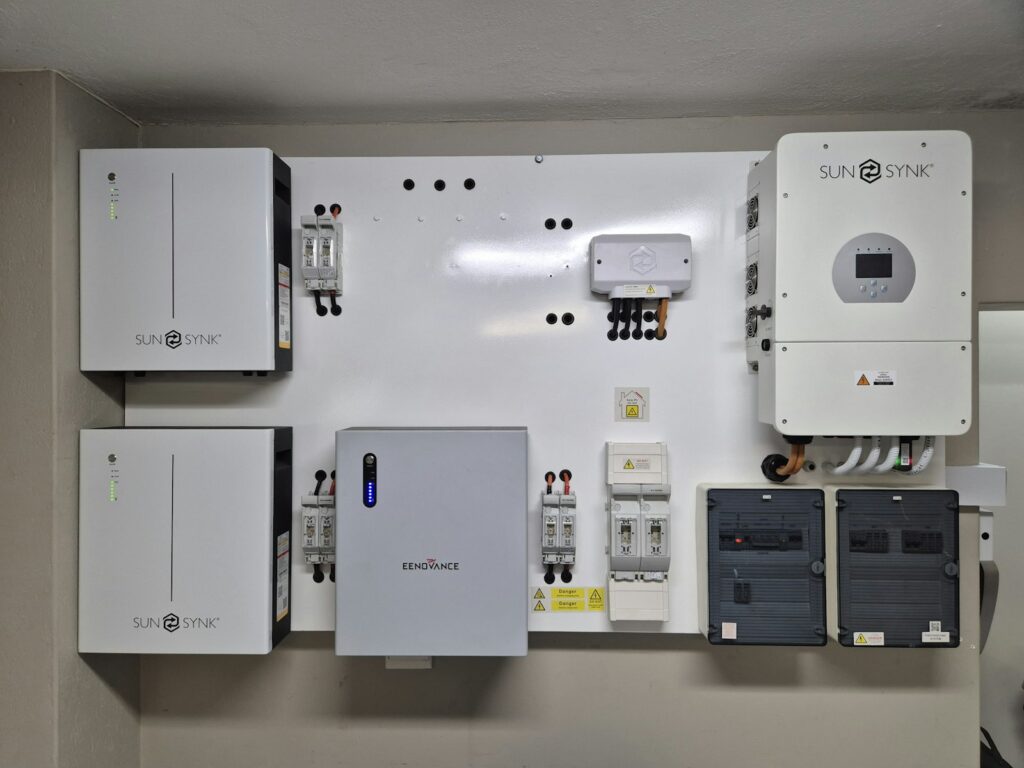
Home batteries are now a common part of solar: a record 45% of U.S. residential solar systems installed in the first quarter of 2026 were paired with battery storage (Solar Builder, citing SEIA and Wood Mackenzie). A battery adds real cost, so it pays to know what it does before you buy one.
We have not yet published verified battery prices. Our calculator covers panels only and says so when you ask about a battery.
kWh vs kW: the two numbers that matter
- Capacity (kWh): how much energy the battery stores, which sets how long it can run your home.
- Power (kW): how much it can deliver at once, which sets how many appliances it can run at the same time. A large air conditioner or well pump needs more power than lights and a refrigerator.
Will solar keep my power on in an outage?
Usually not on its own. A standard grid-connected solar system shuts off during a power outage for safety. To keep power on, you need a battery or other backup equipment that is set up to run during outages. Ask installers to show which circuits stay powered and for how long.
When a battery can pay off
- Your utility pays less for solar you send to the grid than it charges you for power, so storing solar to use later is worth more.
- Your rate plan charges more at certain times of day.
- A battery program pays you, such as Connecticut’s below.
- Backup power matters to you, which has value beyond the bill.
Battery incentives
- Connecticut: Eversource and UI customers can get incentives through the Energy Storage Solutions program, run with the Connecticut Green Bank. Palmetto reported an upfront incentive of $212.50 per kWh for standard customers as of November 2025, plus performance payments if the utility can use the battery at peak times (Palmetto). The incentive declines as funds are reserved, so confirm the current amount before you count on it.
- Florida: we have not verified any statewide battery rebate as of the review date above. Ask your utility about its own programs.
- Federal: the 30% homeowner credit that once covered batteries (Section 25D) ended after 2025 (Solar.com).
Solar battery questions
- Will solar panels power my home during an outage?
- Usually not on their own. A standard grid-connected solar system shuts off during a power outage for safety. You need a battery or other backup equipment set up to run during outages.
- What is the difference between kWh and kW for a battery?
- Capacity in kWh is how much energy the battery stores, which sets how long it can run your home. Power in kW is how much it can deliver at once, which sets how many appliances it can run at the same time.
- Is a solar battery worth it?
- It is more likely to pay off when your utility pays less for exported solar than it charges for power, when your rate plan charges more at certain times of day, or when a battery program pays you. Backup power can also be worth it to you beyond the bill.
- Are there battery incentives in Connecticut?
- Yes. Eversource and UI customers can get incentives through the Energy Storage Solutions program. Palmetto reported an upfront incentive of $212.50 per kWh for standard customers as of November 2025, which declines as funds are reserved, so confirm the current amount. Palmetto
Some links on this page may be affiliate links. If you buy or sign up through them, we may earn a commission at no extra cost to you. It never changes the numbers our calculator shows. How we make money.