A one-page plan for getting through a power outage safely, from what to have on hand to sizing a backup battery. It’s for any household, with or without solar.
Before an outage
- Water: one gallon per person per day, for several days, for drinking and sanitation (Ready.gov).
- Food: at least a several-day supply of non-perishable food.
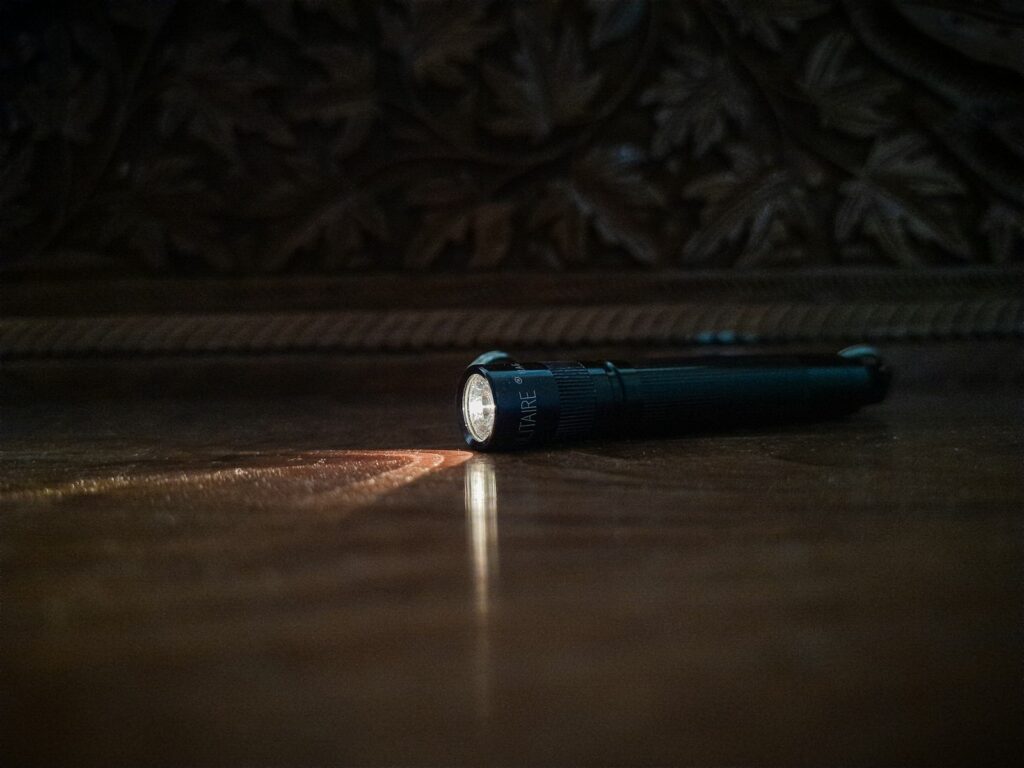
- Light and news: flashlights, extra batteries, and a battery-powered or hand-crank radio. Use flashlights rather than candles.
- Phones: keep phones and power banks charged when bad weather is forecast.
- List what runs on electricity in your home and what you’d do without each item.
- Medical needs: talk to your doctor about a plan for medical devices that need power and for medicines that need refrigeration. Ask how long each medicine can be stored warm.
- Carbon monoxide alarms: battery or battery-backup models near every sleeping area. Check the batteries each spring and fall, and replace the alarm as its maker says or every 5 years (CDC).
- Refrigerator and freezer thermometers, so you can check temperatures later.
- Surge protection for electronics, and know where your main breaker is.
Sizing backup power
A battery’s capacity (watt-hours, Wh) has to cover what you’ll run, and its output (watts, W) has to cover everything running at once.
Example for one day, using typical wattages published by utilities. Replace each with the watts on your own device’s label.
| What you’ll power | Watts | Hours per day | Watt-hours (watts × hours) |
|---|---|---|---|
| Phone charger | 5 | 3 | 15 |
| LED bulb (60W equivalent) | 10 | 5 | 50 |
| Laptop | 60 | 4 | 240 |
| 42-inch LED TV | 80 | 3 | 240 |
| Refrigerator (EnergyGuide label: 400 kWh a year ÷ 365) | See its label | 24 | about 1,096 |
| Total | about 1,641 Wh |
In this example, a 1 kWh (1,000 Wh) power station wouldn’t last the day, while a 2 kWh model would cover it with room to spare. For your refrigerator, use the kWh-per-year figure on its yellow EnergyGuide label; 400 is only an illustration.
- Capacity: choose a battery rated above your total watt-hours. Some energy is lost turning battery power into household AC, so leave a margin.
- Output: the battery’s AC output rating should be higher than the watts of everything running at once. Motors, like refrigerator compressors, briefly draw more when they start, which is what the surge rating covers.
- Recharging: for outages that last several days, solar panels can refill a portable battery during the day.
- Compare models in our EcoFlow vs Jackery vs BLUETTI guide.
During an outage
- Generators outside only, more than 20 feet from windows, doors and vents. Never in your home or garage, even with doors and windows open (CDC).
- Never heat your home with a gas oven, and never burn charcoal or use a camp stove indoors (CDC).
- Know carbon monoxide symptoms: headache, dizziness, weakness, upset stomach, vomiting, chest pain and confusion, often described as “flu-like” (CDC). Get to fresh air and call 911.
- Keep the refrigerator and freezer closed.
- Unplug appliances and electronics to avoid damage from surges when power returns.
- Follow water advisories: boil water or use stored water if you’re told to.
- If it’s unsafe to stay because of heat or cold, go somewhere else. Check on neighbors.
- Report the outage and any downed lines to your utility, and stay away from downed lines.
- Battery power stations make no exhaust, so they can be used indoors. Follow the maker’s instructions.
Food and medicine
- Refrigerator: keeps food safe for up to 4 hours with the door closed. Throw out perishables such as meat, poultry, fish, eggs and leftovers after 4 hours without power (USDA, via FoodSafety.gov).
- Freezer: a full freezer holds a safe temperature for about 48 hours; a half-full one for about 24 hours, with the door closed.
- Refreezing: food can be refrozen if it still has ice crystals or is at 40°F or below, though quality may suffer.
- The 2-hour rule: most perishables kept at 40°F or above for more than 2 hours should be thrown out. Never taste food to check it. When in doubt, throw it out.
- Medicine: after the outage, ask your doctor or pharmacist about any medicine that got warm, especially medicine you depend on.
This checklist gives general safety guidance from U.S. public agencies. It isn’t medical advice.
Sources
- FoodSafety.gov: Food Safety During Power Outage
- CDC: Carbon Monoxide Poisoning Basics
- Ready.gov: Power Outages and Build a Kit
- PSEG Long Island: Electronics Energy Guide (typical wattages)
Photo: Tawseem Hakak on Unsplash.